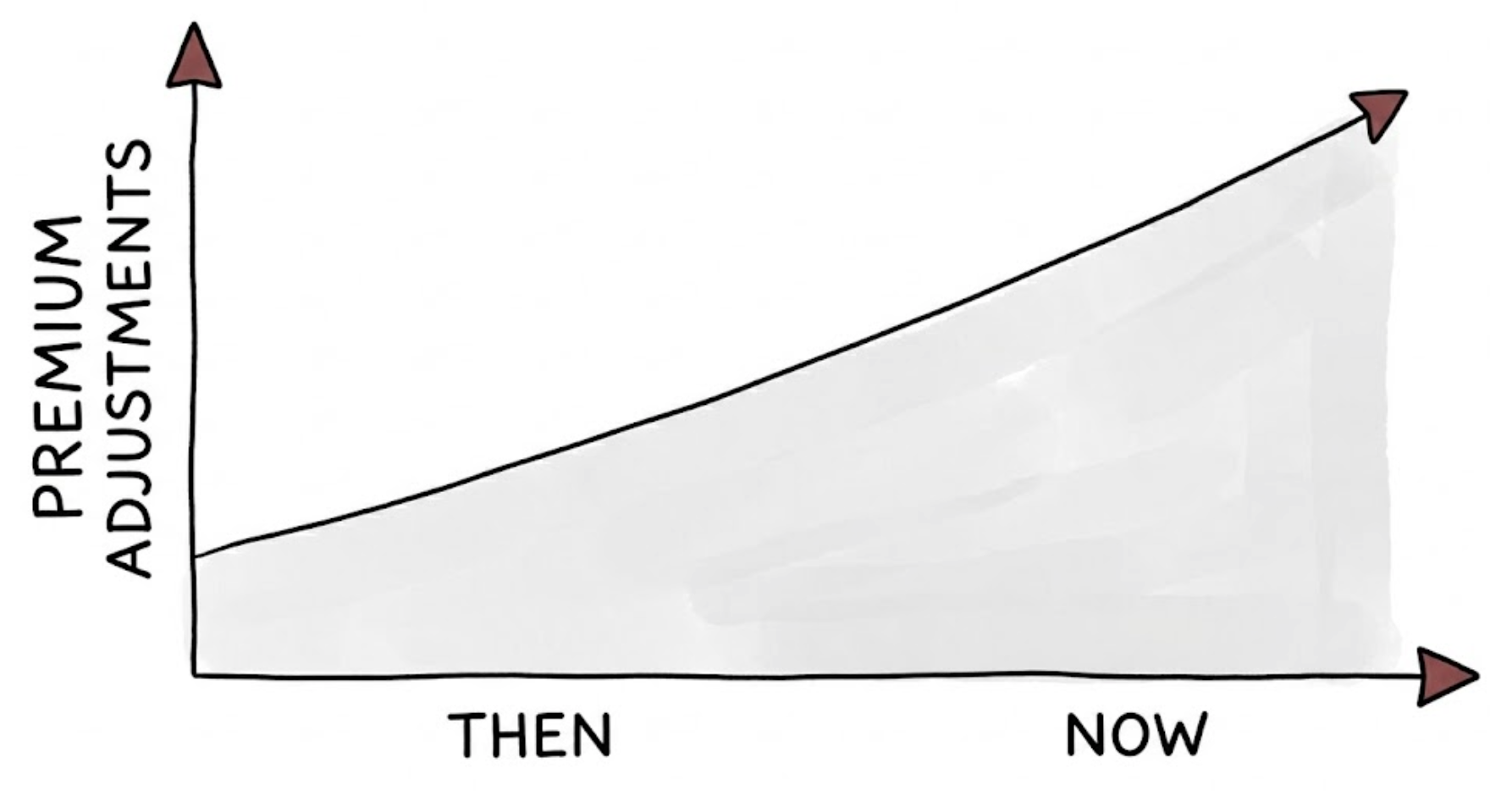

A recent premium increase announcement affecting traditional policies issued as recently as 2022 is a signal advisors and their clients shouldn't ignore.
What to know
- A major traditional LTC carrier has announced rate increases on policies issued as recently as 2022
- Traditional LTC policies can be repriced if actuarial assumptions miss; policyholders absorb the difference
- Hybrid LTC policies carry contractually guaranteed premiums fixed for the life of the policy
Planning implications
This announcement puts to rest a common assumption: that more conservative pricing in recent years had largely solved the premium volatility problem.
It's frustrating. Many clients and advisors made planning decisions in good faith based on pricing that was supposed to hold.
The fundamental issue is structural: traditional LTC still transfers actuarial risk back to the policyholder. I view insurance as a tool to remove risk from a retirement plan. When the future cost of that insurance is itself unknown, it reintroduces the very uncertainty clients were trying to avoid. Clients can still choose traditional LTC, but they should do so with eyes wide open.
As a result, I'm seeing more advisors lean toward hybrid structures where the premium is guaranteed by contract.
When to raise this with clients
- When a client is weighing a lower-premium traditional policy against a hybrid structure
- When reviewing retirement income plans that depend on a fixed premium staying fixed
Bottom line
Premium risk on traditional LTC is still a problem. For clients who want certainty, hybrids eliminate premium risk.

Client resources: I publish short videos and articles explaining long-term care concepts for your clients.
Work together: I'm a long-term care specialist. In addition to articles like these, I help financial professionals evaluate coverage options for clients. Reply or schedule time to refer a client or discuss a case.
Best,
Jesse Vickey
Long Term What?
P.S. If this was forwarded to you, sign up to receive future emails.