

Ian and Kristen,
Your long-term care insurance quotes are ready.
First, please watch this short video I made for both of you:
🔎 Your quotes
These five quotes compare different benefit levels and policy designs.

🧐 My notes
These five options compare traditional and hybrid coverage with different benefit levels.
Option A: This traditional policy from NGL offers four years of benefits each and the lowest premiums.
Option B: This hybrid policy from Nationwide offers eight years of shared benefits, benefits paid in cash, and a high refund to your beneficiaries if you don’t need care. Note that the refund is higher than a single-payment premium.
Option C: This hybrid policy from OneAmerica offers lifetime benefits for both of you, helping protect against extended care needs such as memory care.
Option D: This is the same policy as Option B, with the same premium, but with 5% benefit growth instead of 3%. The tradeoff for the higher growth rate is a lower initial benefit and refund. As the graph below shows, 5% growth comes out ahead if care begins after about age 86 for Kristen or age 85 for Ian.
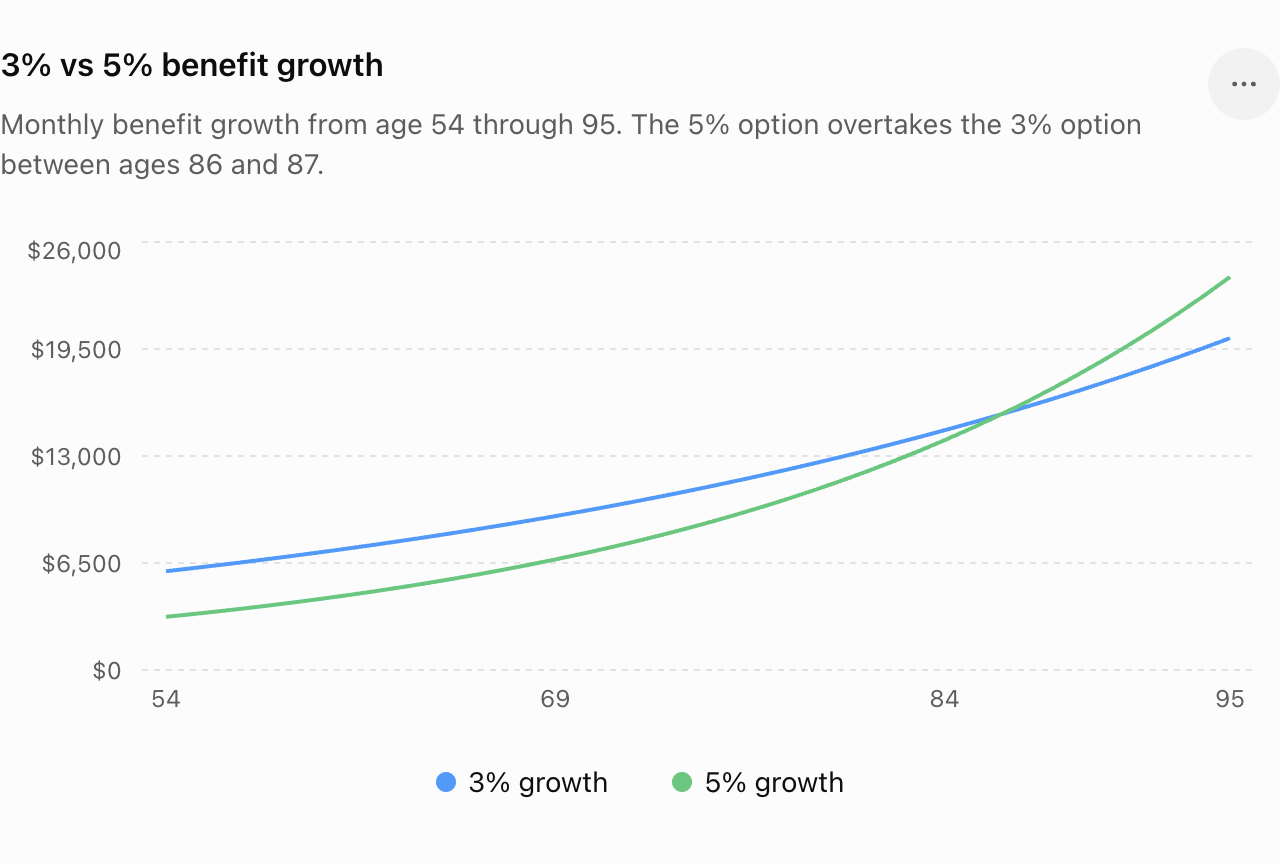
When choosing between the two, you’re essentially making your best estimate of when you might need care. With the breakeven point in your mid-80s, there isn’t an obvious right answer.
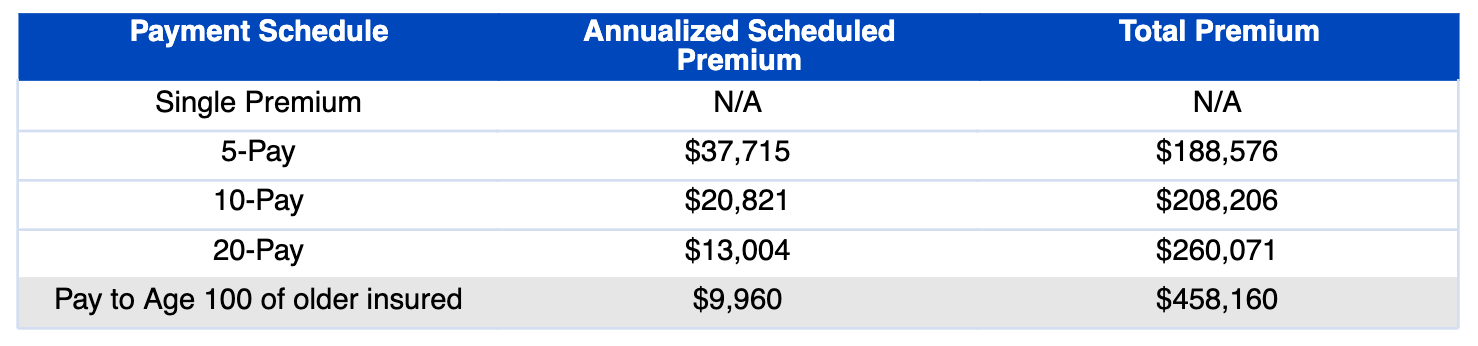
Below are the alternative payment schedules for Option D. If you pay the premium over a shorter period, your total premium would be lower.
Option E: This Nationwide CareMatters Together design restores a $5,000 monthly starting benefit while keeping eight years of shared cash benefits, at a lower premium than Options B and D.
I can show you multiple payment options (e.g., over 5 years, 10 years) for other policies if you'd like.
These policies provide lower annual benefits than the projected cost of care, but you can bridge the gap using personal savings and Social Security. For most people, the goal is to secure meaningful coverage rather than insure every dollar of potential care costs.
You can also adjust the benefit amount to fit your budget. For example, reducing the premium by 25% would generally reduce the benefits proportionally.
👉🏻 Next steps
Reply to my email or text with feedback or schedule time on my calendar to review these options together.
Alternatively, complete this longer health pre-screen form (15 minutes) for more clarity on your options. I’ll share your answers with insurers without your name attached to get informal feedback. This helps identify which policy is the best fit and avoids the risk of a formal decline.
Thanks,
Jesse
P.S. Still learning? See our popular blog or YouTube channel.